The Transnational Feminisms Initiative brings together scholars, practitioners, artists, and activists to examine how feminist knowledge is produced, mobilized, and contested across different historical contexts and how solidarities can be reimagined through attention to power structures, historical entanglements, and alternative sociopolitical visions.
The initiative encompasses a wide range of activities, including in-person and virtual lectures, curated conversations, workshops, film screenings, and artistic collaborations. A central aim is to create spaces where academic research, activist practice, and cultural production intersect, allowing for engagement across diverse constituencies. In addition to hosting speakers, the initiative foregrounds collaborative formats, including opportunities for jointly authored publications and longer-term intellectual partnerships. The program collaborates with a wide network of campus partners, including the Pembroke Center’s LGBTQIA+ Initiative, the Department of East Asian Studies, the Center for Middle East Studies, the Center for Latin American and Caribbean Studies, the China Initiative, the Africa Initiative, and the Saxena Center for South Asian Studies to create a vibrant, cross-regional, and transdisciplinary space for feminist inquiry.
About the Transnational Feminisms Initiative
About the Transnational Feminisms Initiative
-
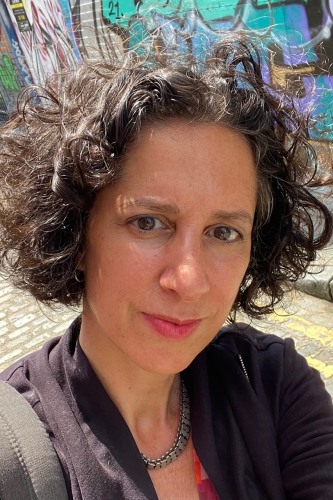
Nadje Al-Ali
Nancy Duke Lewis Professor of Anthropology and Gender Studies, Co-Director of the Transnational Feminisms Initiative, Pembroke Seminar Faculty Fellow 2026-27Nadje Al-Ali is Nancy Duke Lewis Professor of Anthropology and Gender Studies. Her main research interests revolve around feminist activism and gendered mobilization, mainly with reference to Iraq, Egypt, Lebanon, Turkey, and the Kurdish political movement. Her publications include Iraqi Women: Untold Stories from 1948 to the Present (Zed Books, 2007); Secularism, Gender & the State in the Middle East: The Egyptian Women's Movement (Cambridge University Press, 2000); What Kind of Liberation? Women and the Occupation of Iraq, co-authored with Nicola Pratt (2009, University of California Press); Women and War in the Middle East: Transnational Perspectives, co-edited with Nicola Pratt (Zed Books, 2009); Gender, Governance and Islam, edited jointly with Deniz Kandiyoti and Kathryn Spellman Poots (University of Edinburgh Press, 2019); and Resisting Far-Right Politics in the Middle East and Europe: Queer Feminist Critiques, co-edited with Tunay Altay and Katharina Galor (University of Edinburgh Press, 2024);. Her co-edited book with Deborah al-Najjar titled We Are Iraqis: Aesthetics and Politics in a Time of War (Syracuse University Press) won the 2014 Arab-American book prize for non-fiction.
-
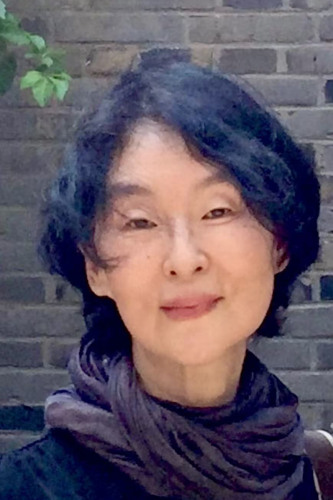
Lingzhen Wang
Professor of East Asian Studies, Co-Director of the Transnational Feminisms InitiativeLingzhen Wang is Professor of East Asian Studies and affiliated faculty in the Department of Modern Culture and Media. She also serves as Distinguished Visiting Professor at Tsinghua University and Nanjing University. Her scholarship spans transnational feminist theory and practice, film history and aesthetics, Cold War politics and left-wing traditions, modern Chinese literature, and Chinese women’s cinema.
She is the author of Revisiting Women's Cinema: Feminism, Socialism, and Mainstream Culture in Modern China (2021) and Personal Matters: Women’s Autobiographical Practice in Twentieth-Century China (2004). Her edited and co-edited publications include Other Genders, Other Sexualities: Chinese Differences (2013), Chinese Women’s Cinema: Transnational Contexts (2011), Years of Sadness: Selected Autobiographical Writings of Wang Anyi (2009), and the Chinese-language volumes Chinese Sex/Gender: Historical Differences (2016), Gender and Chinese Cinema (2012), and Gender, Theory and Culture (2010).